
A step-by-step guide to planning, launching, and promoting a podcast for churches, nonprofits, and faith-based ministries.
If you’re wondering how to start a Christian podcast, you’re not alone. Podcasting can be a powerful tool for keeping your audience engaged, reaching new listeners, and building your ministry’s digital presence. Podcasting is a popular tool in this constantly changing digital world. It can also play a key role in strengthening your ministry marketing strategy. But there are many things to consider when entering the podcasting world.
Podcasting can be overwhelming, so this article will simplify the process and give you the information you need for how to start a ministry podcast. God is at work in your ministry, and those stories need to be told more often. And for those of you who aren’t interested in reading, we’ve put together a How to Start a Ministry Podcast course on the same topic.
Table of Contents
What Churches and Ministries Should Know Before Starting a Christian Podcast
Before diving into gear, branding, and promotion, it’s important to understand the big picture of how to start a Christian podcast successfully. A podcast is not just a content project—it’s a long-term communication and discipleship tool that should align with your ministry’s mission, audience, and digital strategy.
In this guide, you’ll learn how to start a ministry podcast from the ground up—from strategy and branding to equipment, software, and promotion. Whether you’re a church, nonprofit, or faith-based organization, this step-by-step guide will help you launch with clarity and confidence.
A simple Google search for “how to start a ministry podcast for your church or nonprofit” will produce a variety of how-to articles that range from three to seven steps for starting your own show. Here’s the problem: most of those articles are oversimplifying the process because they sell a product or digital tool. Therefore, they are not really all that interested in helping you start your own podcast.
Our guide serves as an all-encompassing guide with no bias toward selling you on any service, platform, or offering. Our goal is not to overwhelm, but to give you all the information you need to make informed decisions as you launch your show.
We will build the foundation first, beginning with a discussion on strategy and followed by how to build a unique brand identity for your show. Then we will help choose gear and software. We will finish with a few tips to help you promote your show before providing the ultimate checklist for how to create a podcast.
How to Start a Christian Podcast: Step-by-Step Guide for Churches and Ministries
Podcast Strategy: How to Plan Your Audience and Content for Ministry
You cannot learn how to start a ministry podcast successfully without a clear content strategy. That’s like starting a documentary film, and skipping out on the pre-production. Or, put another way, that’s like packing for a mission trip without deciding where or why you are going. It’s not a great idea. You need a plan and content strategy for what the show will look like. Here are some things to consider as you develop your strategy.
How to Define Your Podcast Audience for Ministry and Church Leaders
For example, are you creating the show for high-net worth partners? Do you hope to reach an entirely new audience, or perhaps a mass audience? After you identify your audience, keep them at the forefront of your strategy conversation.
Engage with your audience before the show launches by scheduling your host to speak on similar shows. This is also a great way to promote your show and share your unique topic and approach to ministry with established audiences already listening to similar content.
How Often Should a Ministry Podcast Release New Episodes?
How often are you going to post content? Is this a weekly, monthly, or daily show? Whatever the rhythm, please know that consistency is key. The more often you post, the more likely you are to build an audience quickly. We recommend a weekly rhythm, but many shows have had success with a monthly show.
What Type of Podcast Should Your Ministry Create?
You will need to create systems for what will be discussed in each show so you can create consistent content. Begin by deciding what type of show you will create, keeping in mind your topic, as well as the needs and preferences of your ideal audience. There are three general types of content: informational, educational, and inspirational.
Informational Podcast Episodes for Ministries
Informational content feels like news. It’s a report, chronology, or discussion of events. If the purpose of the content is to advise or discuss when, where, or who, then it’s probably informational.
Educational Podcast Episodes for Churches and Nonprofits
Educational content is created to teach the audience something new. It may be a step-by-step guide or how-to article. If the purpose of the content is to answer how or why, then it’s probably educational.
Inspirational Podcast Episodes That Share Testimonies and Stories
Inspirational content is crafted to reach the listener’s heart. It may make the audience cry, laugh, or motivate action. If the purpose of the content is to evoke emotion, then it’s probably inspirational.
Keep in mind that even when the content seems like a blend, it’s still primarily one type. For example, a comical lesson about the space program is educational content, because the purpose was to teach, even though it did so through laughter.
Free Ministry Podcast Content Planning Resource
How to Find Podcast Guests for a Ministry Podcast
Consider who you will invite to speak on your show and how you will find guests. Every podcast producer has a different system for finding guests depending on the type of show. Many podcasters start within their network. You will find testimonies of God’s grace every day, so make a habit of asking ministry partners and participants to share. You may also search databases, find guests on social media, and ask your guests for referrals.
How to Prepare Guests for a Church or Ministry Podcast Interview
Consider what the experience will be for the show and how to prepare your guests. For example, will your guest prepare a presentation? Will you ask certain questions in every episode for an interview? Will the guest choose the topic? Every show is different, so consider what kind of experience you want for your audience and your guests.
Should Your Ministry Podcast Be Live or Pre-Recorded?
Determine if you will air live, or if your show will be recorded and edited before distribution. This decision will guide other decisions we will discuss in a few moments. There are benefits to both options. Social platforms give significant preferential treatment to live content, but the extra traffic comes at the expense of control. Your potentially larger audience will witness your messy moments, such as awkward pauses and other bloopers.
Should Your Ministry Podcast Include Video?
Last, decide if the show will be audio-only, or if you will also record video. Video is not required on all platforms, but services like Spotify are offering it because video is the future of podcasting. There are incredible opportunities to build an audience on YouTube and other platforms that require video to be successful. Video adds work and time in post-production, including additional costs in gear and editing, so take these things into consideration as you think through your content strategy.
How to Brand a Christian Podcast
Now that you identified your audience and established a content strategy, the next step to start a ministry podcast is to build the brand identity of your new show. Will you brand the show around your existing identity, or will you build a new brand for the show’s target audience?
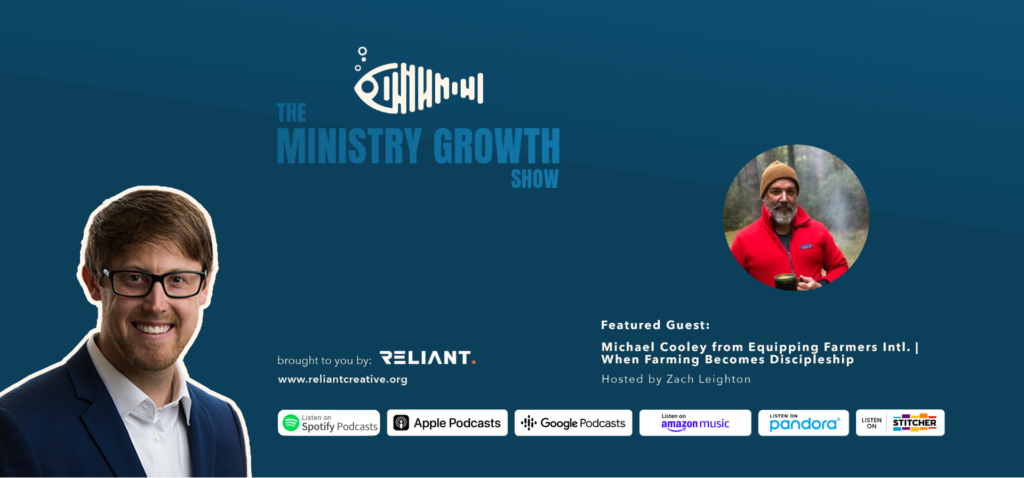
For example, we branded our podcast as The Ministry Growth Show because no one would care to listen to a show called The Reliant Creative Podcast. Our target audience is leaders and marketing specialists in the ministry space, so we branded our show with a title that would engage them. So, with your audience in mind, define the following branding elements for your show.
How to Choose a Podcast Name for Your Ministry
You’re going to need a show name.
How to Write Messaging for Your Ministry Podcast
You’re going to need messaging and communications structures that are specific to the show. For example, how will you describe what the show is about? What are you going to communicate in the intro and outro? How will you talk about the show, both during the show and as you promote and share it with the world?
How to Create Podcast Artwork and Visual Branding
Now that the show name and messaging is established, you can create the brand visuals. Again, if you’re using your ministry name and existing ministry brand visuals, this process will be pretty straightforward.
Important Note: It is acceptable to create a unique name for the show along with existing, familiar brand elements (fonts, colors, etc.). In fact, that might be the most efficient way to go. Whatever you decide, you still need brand elements that are specifically tailored to podcasting.
Ministry Podcast Branding Checklist
- Show Name
- Messaging Guidelines
- What’s the show about?
- Intro and Outro
- Description Guidelines for Each Episode
- Communication Guidelines for Promotional Materials
- Brand Visual Identity
- Podcast Logo, Fonts, Colors
- Cover Art/Image
- Featured Image
- Imagery
Christian Podcast Equipment: What Gear Do You Need to Start?
As you learn how to start a ministry podcast, your equipment decisions will shape your production quality and workflow. There are a lot of directions you can go with podcasting gear. Just like anything else, it comes down to cost, so define your budget.
Like many products, audio gear follows the law of diminishing returns. For example, a microphone priced at $100 will produce much higher quality audio than a $10 microphone, but only slightly lower quality audio than a $1000 mic. Next, we will discuss the gear you will need to start a ministry podcast, along with our recommendations for two price points: a budget-ish friendly option, and our splurge-worthy favorite.
Important Note: All of our recommendations assume the ministry is conducting interviews digitally. These recommendations do not apply for churches doing in-person interviews in a studio setting.
Best Podcast Microphones for Churches and Ministries
There are a lot of options, and your microphone is a critical part of your show, so we’d like to provide a little more guidance, along with two recommendations. Generally, podcasting is an audio-only medium, so it’s recommended that you don’t skimp on quality entirely. You don’t want listeners to tune out because of poor audio, so we don’t recommend ultra-cheap options. Thankfully, it is possible to set yourself up without breaking the bank. Here’s our budget-ish friendly mic and our splurge-worthy favorite.
- Budget-ish friendly: Blue Yeti
- Our splurge-worthy favorite: Heil PR 40 with the Beringer Mixer.
It’s important to note this option requires a sound mixer. You won’t be able to record directly from your microphone to your computer. We don’t think the headache is worth the bump in quality, especially as you start out. It will be far more worth your time to get in a rhythm of consistent content rather than spending your time fussing over small increases in quality.
Best Cameras and Lighting for Video Podcasting
We discussed the potential for video back in our content strategy phase. There are huge benefits to including video in your podcast production, just know those benefits come with costs, including cameras and lighting equipment.
Important note: We have experience with some, but not all, the gear listed below. Figuring out the best camera and lighting setup for your environment may require trial and error.
Best Camera Options for Ministry Podcasts
- Budget-ish friendly: Mobile Device paired with Camo App
The Camo App allows you to use your mobile device as your camera. There is a subscription cost for the Camo App and the obvious cost of the mobile device, but you should already have the phone. In most cases, your mobile device will have a far superior camera than any webcam on the market. This is what we’re using for our podcast, and it’s worked out really great. - Our splurge-worthy favorite: Canon M50
A nicer camera will provide a better picture quality. For example, if you’re using video on your podcast for YouTube, a better picture quality is going to give you an overall bump in the production value. Keep in mind, like audio gear, you’re going to experience the law of diminishing returns with your camera gear. Just because you have a nicer camera, doesn’t mean you’ll have a guaranteed increase in your final quality.

Lighting will have a greater impact on your final quality than the camera you’re using. See our lighting recommendations next.
Best Lighting Setup for Video Podcasting
Budget-ish friendly: Desk Light
Our splurge-worthy favorites: GVM 2-Pack and RGB 2-Pack to add some color to the scene
Important Note: Please know our lighting recommendations are for virtual interviews rather than in person. If you’re conducting in-person interviews with video, you’re probably going to be looking at a studio set up.
Now that you have the gear, we can talk about the software you will need to produce and edit your show.
Best Podcast Software for Churches and Ministries
The post-production process is going to be a key element in the production value of your show. The interview will need to be paired with your show’s intro, and outro, and you will most likely want to cut out awkward pauses, remove moments of disruption from dogs barking, children playing, or simple brain farts by your host or guest. This all takes place in the post-production and editing process.
Again, there are both free and paid options, but unlike the recommendations for gear, we’re only going to recommend one product for each need. Choosing the right tools is a key part of learning how to start a ministry podcast that is sustainable long-term.
Best Podcast Editing Software for Ministries
Editing software such as GarageBand and Adobe Audition will help make your podcast the best it can be. We recommend getting a subscription to Adobe Creative Suite. Approved nonprofits pay $34.99 per month for the entire Adobe software lineup, including Photoshop, Illustrator, Premiere, Audition, and many more powerful creative programs.
Best Remote Podcast Recording Tools
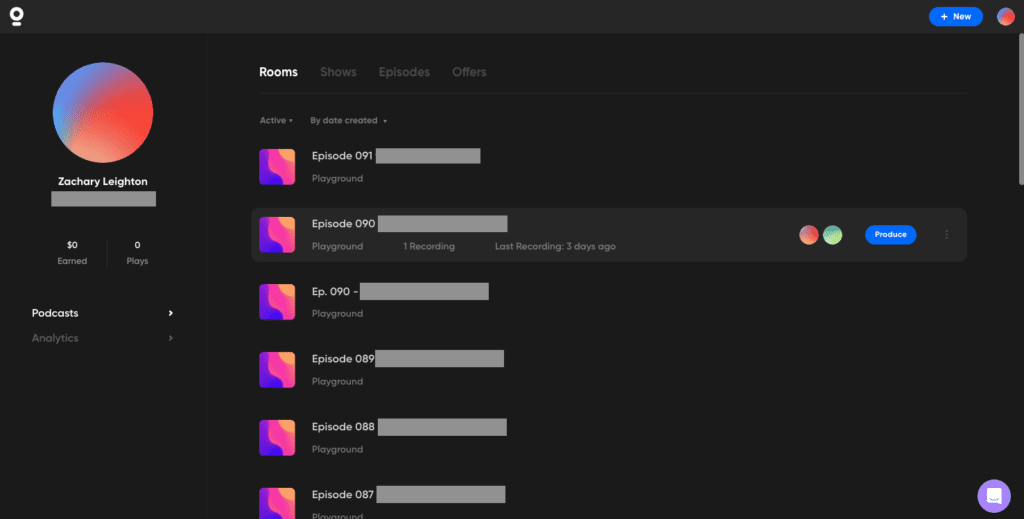
Interview-based podcasts will need interview software, such as Zencastr, Remotely, Squadcast, Riverside, Zoom, Google Meet, etc.
- Update: Riverside is our platform of choice. It’s very similar to Zoom or Google Meet, but both the audio and video recording quality are much better because the content is recorded locally rather than over cloud technology. We’ve been impressed with the platform, and it offers a nice user experience.
- After your episode is edited, we recommend running your exported audio file through Auphonic to give your listeners a polished experience. You can do the same thing in Audition, but Auphonic will simplify and streamline your editing process and workflow. Auphonic is an AI software that helps level the audio and clean it up for final production. Think of Auphonic as the most efficient way to get a final polish after you restain your cabinets.
- Update: Adobe has a new software called Adobe Enhance Speech. It’s currently in Beta, and we just heard about it from a podcasting colleague. Since we are Adobe Creative Suite subscribers, we are going to start incorporating this new technology into our workflow. It looks really powerful, and we’ll keep you posted as we try this new offering.
Best Scheduling Tools for Podcast Guests
Using a booking and scheduling software like Calendly comes in handy for scheduling guests. This isn’t a requirement by any means, but it will make scheduling a lot easier.
Podcast Transcription for SEO and Accessibility
Most podcast creators have a website or archive page to make past episodes available on demand. Including the transcription with each episode can be a powerful way to support your site’s SEO rankings. Some hosting providers include transcription services, so keep that in mind when choosing a web host. In those cases, you will want to use a service like Otter.ai to transcribe your audio into written content.
Best Podcast Hosting Platforms for Churches and Ministries
Once your podcast is ready for publishing, you need a distribution and hosting solution. There are a lot of options on the market, and choosing the right solution can be overwhelming. We’ve been through three distribution and hosting providers with The Ministry Growth Show. We do not have experience with all distribution options, but we’re no stranger to the pain of switching providers when a start-up goes out of business. It’s not a fun process, so we recommend choosing a well-established brand.
A few reliable distribution platforms include Anchor, Seriously Simple, Subsplash, Libsyn, and Soundcloud. We will make three recommendations here, but you really can’t go wrong with any of these options.
- Seriously Simple Podcasting
For WordPress users, we recommend the Seriously Simple Podcasting plug-in designed by the Castos team. It is a great platform for hosting and distributing your podcast if you already have a WordPress site. The plug-in allows you to create content within your current content management system so the podcast will fit seamlessly with your existing content production strategies and workflow. - Anchor.FM
The second option we will recommend is Anchor.FM. Anchor.FM is a free tool owned by Spotify. It’s backed by a big brand, so the odds are in your favor that they won’t disappear. - Libsyn
We don’t have experience with Libsyn, but we’ve heard great things, and they are a well-known offering in the podcast distribution space.
Once you make your selection, go through the setup process and establish an account with your new distributor and host. This is where you will post all of your episodes. If you select a provider from the list above, they will connect your show to all the major podcasting applications (Google Podcasts, Apple Podcasts, Spotify, Amazon Music, etc.).
Important note: Some podcasting applications require you to create an account and connect your RSS feed. As you publish episodes, verify they appear on the various podcasting apps and platforms. If your show isn’t showing up, that probably means you need to create an account and connect the RSS feed.
Do You Need a Podcast Website or Episode Archive Page?
While not required, there are many benefits to building a website or an episode archive page for your podcast. It’s a great way to generate content native to your site, and it will help with SEO. This is especially true if you transcribe each episode and place the transcription on the content page of each episode, very much like a blog. We included links above for Otter.ai, a resource that can help automate transcription.
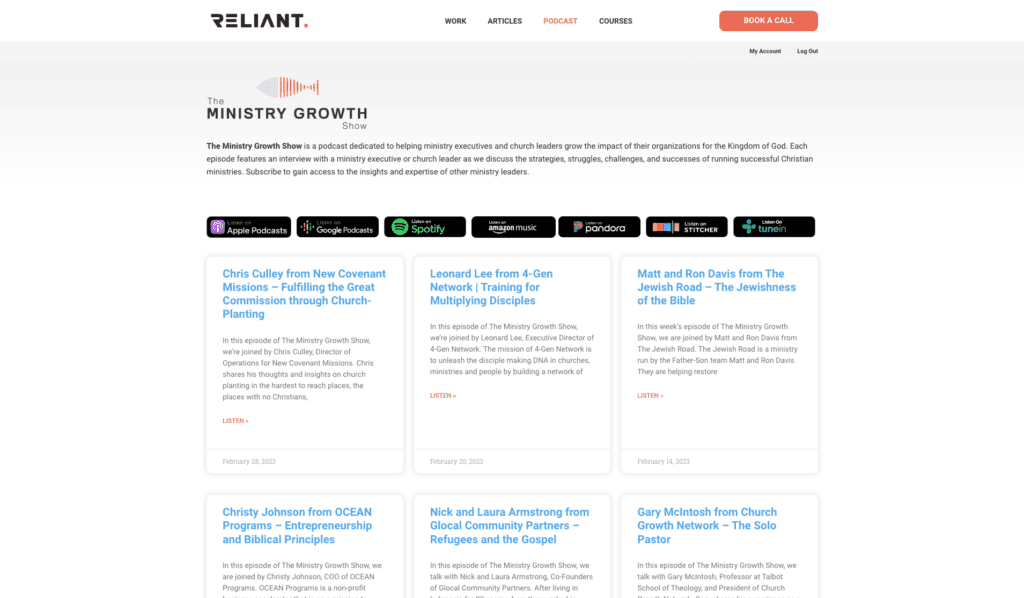
We set up an archive page on our website for our podcast episodes. We then bought the domain www.theministrygrowthshow.com, to redirect to our archive page. When we run paid or Google Ad Grant ads for the show, we have a URL that is specifically branded to the show.
Additionally, our site gets the benefits of the show’s link juice and SEO. The options for how to handle the website or an archive page will be determined by your current site’s capabilities and whether you want to create a separate site or archive page for your show.
How to Promote a Christian Podcast After Launch
Once you have a finished, edited, and exported podcast file, it’s time to distribute and promote the show and each episode. We spent some time developing a content strategy at the beginning of this article, so you may have already considered some questions we will pose in this section.
Here is a list of things you will need to consider as you distribute and promote your show. And don’t forget, your Google Ad Grant (click here if you need help with the Google Ad Grant) is a great way to promote your new show. If you haven’t taken advantage of the grant, or if you’re not getting your full monthly spend, we can help you with that as well.
A podcast should never exist in isolation—it should be part of a larger digital ministry strategy. Promotion is one of the most overlooked steps when ministries learn how to start a ministry podcast.
Best Social Media Platforms to Promote Your Podcast
Consider which platforms you will share and promote your show, such as Facebook, Insta, LinkedIn, TikTok, etc. This will be determined by the audience. For example, LinkedIn is a great place to engage with business professionals. If you want to reach young adults, you’re more likely to find success on TikTok (TikTok is no longer just for teenage girls who like to dance). It’s important to note, this will probably be a moving target.
The platforms where attention is today might look different tomorrow, so be nimble and don’t be afraid to try new platforms.
What Content Should You Create to Promote Podcast Episodes?
Now that you have determined the platforms for where your content will land, you need to decide what types of content you will need for each of those platforms. We have provided a list of the most popular platforms at the time of writing this document. This list will probably change as the platforms change. When we started in this space, vertical video wasn’t a thing. Today, it’s the single greatest opportunity across the major platforms to build an audience.
Important note: Generally, when posting content on these platforms, the point is to drive audience engagement to your show or website. But, these platforms want audiences to stay on their own platforms, so they are all making strides to allow users to create content and natively place it on these platforms.
To save time, we recommend using software like Canva or Adobe to create featured images for your site, cover art, and branded post templates. Use the same social media scheduling tool you use for your other marketing content to distribute posts for each episode to your followers.
YouTube, Facebook, Instagram, LinkedIn, and TikTok all allow for native video content. So, if you’re creating a show that includes video production, you may want to post the entire episode natively on each of those platforms. Each platform has a different video length limit, so be sure to pay attention to those requirements.
How to Create a Podcast Marketing and Content Schedule
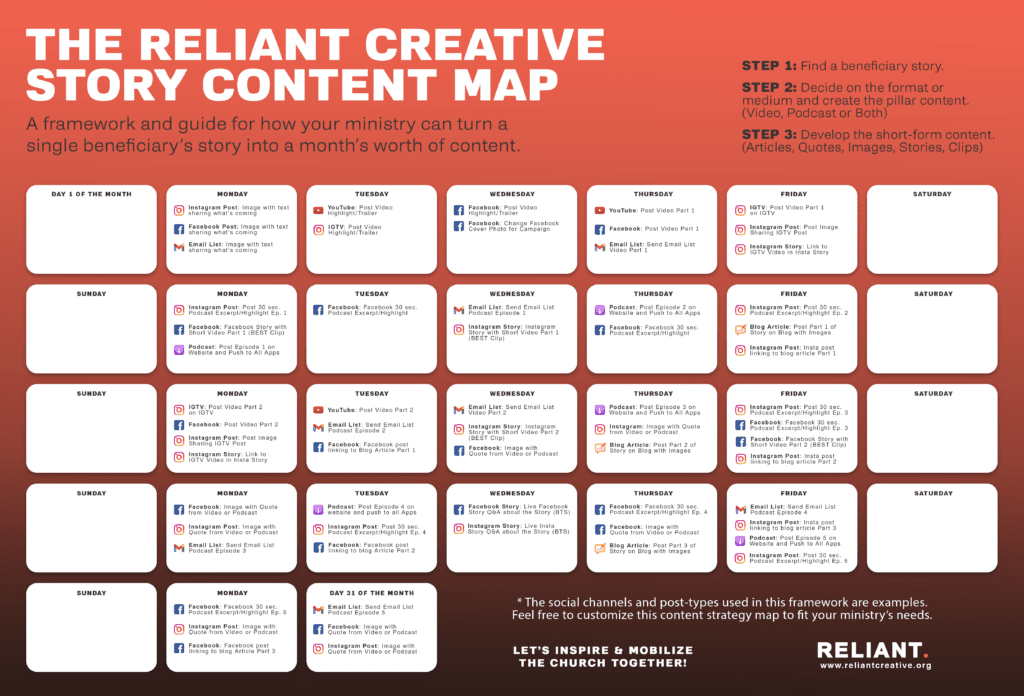
It’s important to create a content schedule for your show. We created a Content Strategy Map to help get you started. you will find the map under the Storytelling Content category. It’s a free resource and a great starting point, so be sure to use it to your advantage.
Will there be micro-content included in the distribution schedule? One benefit of a podcast is that it serves as a great piece of pillar content that can drive a micro-content strategy. Be sure to check out our free course, Story-Driven Content Strategy, where we will walk you through those terms.
Now that you know what you’re going to need to start your first podcast, let’s take some time to walk through the entire process and workflow from start to finish. As promised, we’re happy to provide a free, downloadable checklist.
At Reliant Creative, we’ve helped ministries launch podcasts, develop content strategies, and build story-driven marketing systems that reach the right audiences. The checklist below summarizes the full process so your team can move forward with clarity.
The Ultimate How to Start a Christian Podcast Checklist
Use this checklist as a quick reference as you work through how to start a ministry podcast step-by-step.
Steps 1-4 comprise decisions you will make and implement before launching your show.
- Develop an Audience and Content Strategy
- Who is your audience?
- What is your Content Schedule?
- What type of show are you doing?
- Will your show air live?
- Will your show include video?
- Build Your Podcast Brand Identity
- Decide your brand name
- Write your brand messaging
- Create your brand visual identity
- Get your gear
- Microphone
- Cameras
- Lighting
- Purchase your software
- Audio (and video) editing tools
- Interview software
- Appointment Scheduling
- Distribution and hosting
- Website or archive page
- Promotion
Steps 5-16 will be rinsed and repeated with each episode
- Find a guest for the show.
- Schedule the guest.
- Create questions to guide the show.
- Conduct the interview/recording.
- Edit and export the final episode.
- Run the episode through Auphonic.
- Transcribe the audio into written content.
- Publish the episode and transcription on your host provider.
- Publish the episode on your website or archive page.
- Create promotional content from templates.
- Distribute promotional content across platforms of choice.
- Create micro-content from the show.
Rinse and Repeat
Here are answers to some of the most common questions ministries ask before launching a podcast.
Frequently Asked Questions About Starting a Christian Podcast
How much does it cost to start a ministry podcast?
You can start a ministry podcast with a very small budget. Many churches begin with a quality USB microphone, free recording software, and a basic hosting platform. As your podcast grows, you can invest in better microphones, cameras, lighting, and editing tools to improve production quality.
How often should a church or ministry release podcast episodes?
Consistency is more important than frequency. Many successful ministry podcasts release episodes weekly or monthly. Choose a schedule your team can sustain long-term, because consistency helps build trust and audience loyalty.
Do ministry podcasts need video, or is audio enough?
Audio-only podcasts are still effective and widely used. However, adding video can expand your reach on platforms like YouTube, Facebook, and Spotify. Many ministries start with audio and add video later as their podcast grows.
What is the best podcast hosting platform for ministries?
Popular podcast hosting platforms include Seriously Simple Podcasting (for WordPress users), Anchor/Spotify for Podcasters, and Libsyn. The best choice depends on your existing website, workflow, and technical comfort level.
How can a ministry podcast help grow a church or nonprofit?
A podcast helps ministries share stories, teach, disciple, and reach new audiences beyond Sunday services or in-person events. Over time, a consistent podcast builds trust, expands digital reach, and strengthens relationships with supporters and partners.
What should churches talk about on a podcast?
Ministry podcasts often include interviews, teaching, testimonies, leadership conversations, and behind-the-scenes ministry stories. The best topics are those that serve your audience while clearly connecting to your mission and calling.
Once this is added, your structure + headings + FAQ schema signals will be very strong for RankMath and search intent.
Start Your Christian Podcast with Confidence
Congratulations! You now have a foundation to start your ministry podcast! We hope our guide has helped simplify and organize your journey to create a podcast for your Christian nonprofit or church. If you’re looking for additional guidance and direction on starting a podcast, Spotify has created a helpful article on the subject titled How to start a podcast.
Podcasting is a significant investment and commitment, but it’s an incredibly powerful way to expand your reach, help your ministry grow, and connect with other people in the ministry space. Most importantly, a podcast allows you to give glory to God and testify to His work through your ministry.
At Reliant Creative, we specialize in helping ministries build the brand identity and messaging based on the timeless power of storytelling. We’d be glad to come alongside you, so…
You can also learn more about how we help ministries mobilize the Church through the power of story by downloading our free ebook: The Ultimate Guide to Story-Driven Messaging.