How Visual Storytelling Helps Churches Clarify Their Message and Grow
Visual storytelling for churches has become one of the most powerful ways churches can connect with their communities and grow their ministries.. For many churches, it’s no longer just about sharing a message—it’s about showing it. When a church tells a story through images, videos, and thoughtful design, it taps into something deeper, something more emotional. People begin to feel the heart of the ministry rather than just hear its words. And in a world overflowing with content, that kind of connection can be transformative.
Table of Contents
How Churches Use Visual Storytelling to Reach Their Community
Let’s be honest—church attendance isn’t what it used to be. People’s lives are busier, more digital, and, in many cases, more disconnected. But here’s the good news: that doesn’t mean churches can’t reach people in meaningful ways. Visual storytelling can help bridge that gap. Whether it’s through a powerful photo or a touching video testimony, visuals can speak to the heart in ways that words alone can’t.
Think about it: an image of your congregation gathered in prayer or a short video showing the real transformation that’s taken place in a real person’s life through Christ can communicate so much more than just a written bulletin or pastoral monologue. When people see faith in action, they’re drawn in. They want to be part of something bigger—something meaningful.
Why Visual Storytelling Matters for Church Growth
How Testimony Videos and Photos Build Trust in Your Church
Everyone loves a good story, right? It’s in our nature to listen, learn, and grow through stories. When your church shares the faith journey of people in your congregation—where they’ve been, where they are now, and how they’ve stepped into obedience in God’s invitations—you’re doing more than just filling time during a sermon. You’re inviting people to be part of something bigger.
Take, for example, the story of how a family in your congregation said yes to stepping into the foster care system and years later the result was the adoption of multiple children. Sharing that story shows the rest of your congregation that, “if that family can do it, we might be able to do something similar.” It’s not just a concept anymore; it’s real. It’s something people can see, understand, and be inspired by.
Creating Authentic Church Content People Relate To
In a world that’s saturated with content, it’s more important than ever to make your message relatable. It’s not about sounding perfect or overly polished. It’s about being real. When you show the everyday moments—families coming together, friends supporting each other, someone finding comfort in prayer—you make your church feel more accessible. You’re showing people that faith isn’t just for Sunday morning; it’s part of daily life.
Using Storytelling to Strengthen Church Community
Storytelling isn’t just about sharing your message; it’s about building relationships. Your church has probably experienced moments of real transformation—whether through personal testimonies or collective outreach efforts. Those stories have the power to bring people together, to foster a sense of belonging.
When you encourage people in your congregation to share their own stories, you’re not just adding content to your website or social media feed. You’re creating a space where people feel valued and heard. It’s a way of saying, “You matter here. Your story matters.” You’re creating space to show that what has happened in one person’s life can happen in another person’s life as well.
How to Clarify Your Church’s Core Message
Defining Your Church’s Mission and Message for Digital Platforms
At its best, visual storytelling for churches is not about marketing—it is about faithfully showing what God is already doing in your community.
Every church has a unique mission, a core message that sets it apart. But if your story isn’t clear, people can get confused about who you are and what you stand for. This isn’t about having a polished marketing slogan—it’s about knowing your heart as a community. What is God doing in your church? What’s the big picture?
Ask yourself, “What do we want people to know about us, even if they only visit once?” Whether it’s a focus on serving the community, fostering deeper relationships, or supporting personal growth in Christ, that core message should shine through in everything you do.
Building Consistent Church Messaging Across Platforms
Once you’ve nailed down your message, it’s important to keep it consistent. People need to hear the same story again and again in different ways for it to stick. Marketing is a practice in repetition. So, when you’re sharing updates on social media, writing newsletters, or posting photos from last Sunday’s service, think about how each piece fits into the bigger picture.
That doesn’t mean repeating yourself word for word, but it does mean keeping the same tone, values, and themes throughout. Consistency builds trust—it shows your community that your message isn’t just a nice idea; it’s who you really are. We talk a lot about brand beliefs. What do you believe as an organization? Let that shine through in your content… and use your stories to carry those brand beliefs to your audience.
How to Collect and Share Church Testimonies Effectively
There’s nothing more powerful than hearing someone share their own story of transformation. Personal testimonies give a face to the mission of your church. When people hear about how someone’s faith has deepened or how a family found community in your church, it makes the church’s story come to life.
You could start a monthly spotlight where you share one person’s journey, either in writing, through photos, or even a short video. These stories remind everyone that the church isn’t just a building or a program—it’s a living, breathing community of people.
Digital Marketing Strategies for Church Growth
Church Social Media Strategy That Builds Engagement
Let’s face it: social media is where people are these days. And while it might seem overwhelming, it can be an incredible tool for sharing your church’s story and building relationships. The key is to be intentional. Posting for the sake of posting won’t move the needle, but if you’re using visuals and stories that resonate with people, and then actually engaging online with people, you’ll start to see more engagement. We don’t live in the broadcast era anymore, so don’t just broadcast your content, get on and engage with people.
Think about creating a simple content calendar—nothing too complicated. Maybe you post a testimony on Tuesdays, a highlight from Sunday on Fridays, and an invitation to an upcoming event on Saturdays. Consistency is key, and it doesn’t have to be fancy. Just make sure every post points back to your church’s core message.
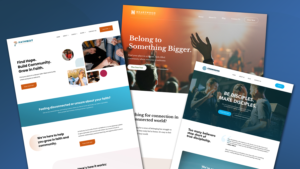
How to Design a Church Website That Tells Your Story
Your website is like your digital front door—it’s often the first place people will go to learn about your church. So make it inviting! Use engaging images, simple navigation, and include sections that tell your story in a way that feels personal.
Don’t just treat it as an online bulletin board—think of it as a place to show who you are. Feature photos of real people from your church, share stories of life change, and make sure visitors can easily find out how to get involved. A church website that feels alive will encourage visitors to take the next step.
Using Email and Text Messaging to Keep Your Church Connected
Email is a great way to keep your congregation informed and engaged, but it’s also a powerful storytelling tool. Regular emails (think weekly or monthly) can be a space where you share updates, highlight upcoming events, and even share personal stories or messages from your team. Additionally, if you haven’t already, start playing with text message-based platforms like Text In Church. Platforms like these are seeing a lot more engagement and open rates than traditional email platforms.
Make sure to include visuals—photos from recent events, graphics to promote new sermon series, or short video clips. And don’t forget to invite people to respond. Email is a two-way street, and when you ask for feedback or prayer requests, you’re deepening the relationship with your community.
How to Measure Church Marketing Effectiveness
Tracking Church Website and Social Media Analytics
So, how do you know if all this storytelling is making an impact? Start by keeping an eye on how people are interacting with your content. Are they liking and sharing your social media posts? Are they clicking through your emails? Is your website getting traffic? Tools like Google Analytics can help you track these metrics, but don’t get too caught up in the numbers. The goal is to understand what’s resonating with people and where you might need to make adjustments.
Gathering Congregation Feedback to Improve Communication
Sometimes, the best way to know if you’re hitting the mark is to just ask. Invite your congregation to share how they feel about the stories you’re telling. Do they feel connected? Are they inspired by what they see and hear? This can be as simple as a casual conversation after service or as formal as an anonymous survey. What matters is that you’re listening.
Adjusting Your Church Marketing Strategy Over Time
As you gather feedback and track engagement, you’ll probably discover some things that work really well and others that don’t. That’s totally normal. The beauty of storytelling is that it’s a living, evolving process. If you notice that certain types of stories (like personal testimonies or community service highlights) are resonating more than others, lean into that. It’s okay to experiment and adapt as you go. The important thing is to stay true to your core message while being open to change.
FAQ
What is visual storytelling in a church context?
Visual storytelling in a church context uses photos, videos, design, and testimonies to show how God is working in a community rather than simply announcing information.
How does visual storytelling help church growth?
It builds trust, increases engagement, and helps people see real-life transformation, which makes the church’s mission tangible and relatable.
What kind of content should churches create?
Testimony videos, event highlights, baptism stories, ministry impact photos, and simple mission-focused graphics.
Does every church need a professional website?
Yes. Your website is your digital front door. It should clearly explain who you are, what you believe, and how someone can take a next step.
How often should a church post on social media?
Consistency matters more than volume. A simple weekly rhythm built around your mission is often more effective than daily random posts.
How do we measure if our church marketing is working?
Track website visits, social engagement, email open rates, and—most importantly—real-world next steps like event attendance and first-time visitors.
Clarify the Story Your Church Is Already Living
Your church already has stories worth telling.
The question is whether your community can see them clearly.
If your message feels scattered, your digital presence feels disconnected, or your stories aren’t landing the way they should, the issue may not be your design. It may be clarity.
Before you redesign a website.
Before you overhaul social media.
Before you launch another campaign.
At Reliant Creative, we help churches define their core message, align their communication across platforms, and build a story-driven strategy that reflects who they truly are. When your message is clear, everything else becomes simpler — your website, your content, your outreach.
If you’re ready to strengthen your church’s message and align your digital presence around it, explore our Messaging Strategy for Churches and take the first step toward telling your story with confidence and clarity.