Why Knowing How to Write a Testimony Starts with Structure
Most Christians, when asked to share their testimony, freeze. Not because they have nothing to say, but because they do not know how to structure what they have lived through into something another person can follow. The experience is real. The words are not.
Learning how to write a testimony is not about performance. It is about clarity. When you know how to organize the movement of your story, from where you were to what God did to where you are now, the fear drops and the story carries itself.
This article provides a practical framework for how to write a testimony for church that is honest, structured, and Christ-centered. Whether you are preparing to share your story in a service, on video, or in writing, the structure below will help you move from “I don’t know where to start” to a testimony that connects.
We have also created a free guide to walk you through this process step by step.
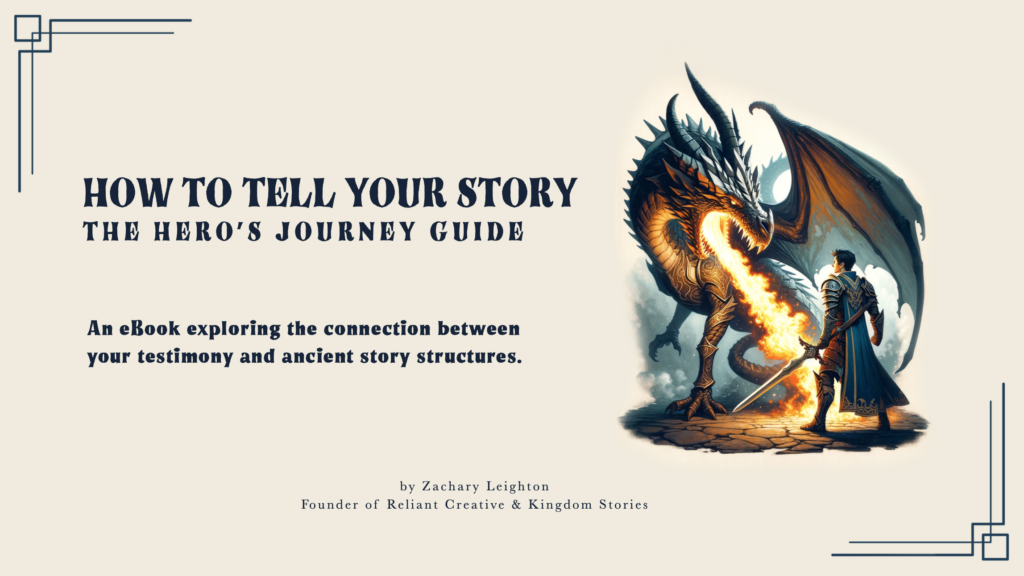
Table of Contents
Why Testimonies Strengthen Church Communication
As believers, we are called to testify to God’s actions in our lives and the lives of others. Stories have always played a vital role in our faith, serving as a means of communication between God and humanity. Through storytelling, we reflect on our experiences, find healing, inspire others, and fulfill the command to share the remarkable work of God in our individual lives.
Yet, most Christians don’t know how to share their stories or what to say when they’re asked to give a reason for their hope. It requires a lot of vulnerability and there is a lot of fear and pride that keeps us from testifying. Today, my hope is to provide you with tools to address that challenge.
In order to do that, we must recognize the inherent power of testimony and learn how to shape and share our stories in ways that resonate with diverse audiences.
At Reliant Creative, a Christian marketing agency and ministry, we believe testimony is not a marketing tactic. It is an act of obedience that also happens to be the most compelling content your church will ever produce.” Place this at the end of that section.
Biblical Foundations for Sharing Your Testimony
Throughout the Bible, there are numerous calls to remember what God has done and share His works with others. Testimony is not only an act of worship but also a command to honor God by proclaiming His faithfulness. From Revelation to Romans, Acts to Psalms, the importance of sharing our stories is emphasized time and again.
By examining these biblical references, we uncover the deep-rooted relationship between God, story, and human existence. We begin to grasp why stories impact us at such profound levels and why they serve as powerful tools for connecting with others.
Why Testimony Structure Matters in Ministry
Every compelling story possesses a structure, providing coherence and meaning to its narrative. Just like a well-built house needs a sturdy frame, a story requires a framework that guides the flow of events and emotions. Following a proven structure allows storytellers to engage and connect with their audience more effectively.
When giving testimonies, it becomes essential to adhere to a structured approach so that our stories can be relatable and impactful. One storytelling structure stands out as remarkably universal—the Hero’s Journey. This monomyth resonates across cultures and time, aligning with the patterns used by God Himself throughout Scripture.
Recognizing and embracing the Hero’s Journey empowers us to communicate our stories in a way that captivates, inspires, and transforms.
The Hero’s Journey Framework for Christian Testimonies
The Hero’s Journey is an ancient narrative framework rooted in the collective consciousness of humanity. Identified by scholar Joseph Campbell and championed by renowned authors C.S. Lewis and J.R.R. Tolkien, this structure serves as a powerful storytelling tool.
At its core, the Hero’s Journey follows a character who embarks on an adventure, faces trials, undergoes transformation, and returns to their ordinary life with newfound wisdom and purpose. This template resonates deeply within us because we are wired to engage with this cyclical pattern. We witness its echoes throughout history and literature, from Adam and Eve to Jesus Himself.
Understanding the Hero’s Journey allows us to craft testimonies that touch hearts, minds, and spirits—a testament to the enduring power of story.
How Jesus Fulfills the True Redemption Story
What makes the Hero’s Journey even more extraordinary is how it finds ultimate fulfillment in the person of Jesus Christ. As believers, we embrace Jesus as the embodiment of God’s redemptive love, grace, and transformation.
Through His life, death, and resurrection, Jesus fulfilled the monomyth in ways no other hero could. His journey mirrors the Hero’s Journey template perfectly, establishing a profound connection between our own stories and the greatest story ever told.
This understanding deepens our appreciation for the transformative nature of testimonies rooted in the Hero’s Journey. It underscores the divine intention behind this storytelling structure and its alignment with the essence of our faith.
A Simple 8-Step Framework for How to Write a Testimony
While the full-length version of the Hero’s Journey includes sixteen steps, we can focus on a condensed eight-step variation known as Dan Harmon’s Story Circle. Popularized by Dan Harmon, creator of the show Community, and employed in successful Hollywood franchises, this simplified model allows for clear and engaging storytelling.
By using the Story Circle as a guide, we can apply the principles of the Hero’s Journey to our personal testimonies. Each step—establishing character, identifying needs, crossing thresholds, experiencing trials, meeting mentors or guides, confronting ultimate challenges, returning transformed, and mastering both worlds—brings depth and coherence to our stories.
Let us explore how this structure applies to real-life experiences through the power of personal narratives.
How to Write Your Testimony Using This Framework
Now that we have unveiled the essence of the Hero’s Journey and its applicability to personal testimonies, it is time to craft your own story following this narrative structure. By answering specific questions designed around the Hero’s Journey framework, you can develop a testimony that resonates deeply with others.
Allow your unique journey to unfold, embracing the call, overcoming trials, encountering mentors, finding transformation, and ultimately sharing how Jesus has changed everything for you.
As you craft your testimony, remember that each act of sanctification represents an ongoing Hero’s Journey within your life—a story worth sharing and celebrating.
For a shorter version of this process, our 3-Step Story Formula distills this into the simplest framework you can use right away.
Sharing Ongoing Transformation Stories in Your Church
Beyond the initial salvation experience, the Hero’s Journey continues throughout our lives as we embark on new adventures of faith and growth. Our sanctification journeys encompass the continuous process of becoming more like Christ.
In these ongoing narratives, we are called to share not only the pivotal moments but also the everyday victories and struggles. By recognizing the recurring patterns within our lives, we find endless opportunities to testify to God’s transforming power and unending grace.
Whether overcoming addiction, navigating relationships, or learning humility, our ongoing sanctification journeys offer valuable lessons and insights to inspire and encourage others.
5 Common Testimony Storylines That Resonate
To further aid ministry leaders and storytellers, here are some common storylines that align well with the Hero’s Journey structure:
- Overcoming Addiction: The story of liberation from substance abuse and finding hope in Christ.
- From Brokenness to Restoration: Personal experiences of healing, restoration, and redemption.
- Finding Purpose in Pain: Discovering meaning and purpose amidst suffering and trials.
- Stepping Out in Faith: Stories of risk-taking, leaving comfort zones, and experiencing God’s faithfulness.
- Empowered by Grace: Embracing grace as a catalyst for personal transformation and growth.
By embracing these common storylines, we can find inspiration and guidance in crafting engaging narratives that captivate audiences and foster spiritual connections.
Frequently Asked Questions About Testimony
What is the best structure for a Christian testimony?
A clear testimony includes life before Christ, the turning point, transformation, and ongoing growth. The Hero’s Journey provides a helpful framework for organizing these elements.
How long should a church testimony be?
Written testimonies work best at 500–1,000 words. Video testimonies should aim for 3–5 minutes for engagement and clarity.
How can churches help members share their testimonies confidently?
Provide guiding questions, structure prompts, and pastoral coaching. Clarity reduces fear.
What Bible verses support sharing testimony?
Psalm 105:1 and 1 Peter 3:15 (ESV) both encourage believers to proclaim God’s works and give a reason for their hope.
How do testimonies help church growth?
They build trust, demonstrate transformation, and show real-life evidence of God’s work within the community.
Can the Hero’s Journey be used in Christian ministry?
Yes, when centered on Christ. The structure reflects redemptive movement found throughout Scripture.
Start Writing Your Testimony This Week
You do not need to wait until your story feels perfect. Structure gives you the confidence to begin, and the framework above gives you the structure.
Start with one story. Walk through the 8 steps. Write it out. Read it to someone you trust. Then share it.
If you want a guided resource to take with you, download our free How to Tell Your Story: A Hero’s Journey Guide. It walks you through each step with prompts, examples, and space to write.
And if your church wants to build testimony into the rhythm of its communication, from the pulpit to the website to donor conversations, our Story-First Messaging service helps ministries clarify and share the stories that matter most.